Dans un tourbillon punk-rock où danseurs et musiciens se télescopent en live, Stéréode Philippe Decouflé cogne fort à Juvisy-sur-Orge. Création explosive de la Compagnie DCA, ce spectacle hybride fusionnant acrobaties, chorégraphie et riffs endiablés, a électrisé l’Espace Jean Lurçat ce 7 février 2026.
Des JO 92 aux JO 26 : l’héritage Decouflé
Alors que se déroulent les Jeux d’hiver 2026 à Milan-Cortina, souvenons-nous du spectacle hors normes qu’avait chorégraphié et mis en scène Philippe Decouflé pour les JO d’hiver d’Albertville en 1992. Cette fresque olympique, mobilisant 3000 artistes professionnels et amateurs avec acrobaties et folie collective, avait propulsé la danse française sur la scène mondiale. Stéréo prolonge cette exploration de la musique live associée à la danse et aux arts du cirque : un trio instrumental (guitare-basse-batterie) dialogue avec cinq performeurs dans un chaos organisé, boucles temporelles et énergie brute.
Sur la scène de l’Espace Jean Lurçat à Juvisy-sur-Orge , Stéréo explose. Philippe Decouflé signe chorégraphie et mise en scène. Violette Wanty, Olivia Lindon, Eléa Ha Minh Tay, Aurélien Odout et Vladimir Duparc virevoltent entre pointes de ballet, plateforme shoes rétro-futuristes et acrobaties jouissives. Le groupe live – Arthur Satàn (guitare), Louise Decouflé (basse), Romain Boutin (batterie) – balance un son punk inspiré du film de Brian de Palma Phantom of the Paradise. Baptiste Allaert, danseur et comédien de la Compagnie DCA, qui devait danser et présenter le spectacle, blessé à la cheville droite quelques jours avant la représentation, n’a pu participer au spectacle. Philippe Decouflé et la troupe ont dû repenser Stéréo sans lui. Baptiste Allaert, assis au premier rang, était venu supporté ses camarades.
Jean-Claude Djian
Retrouver l’intégralité de cet article sur le site de Félix Magazine
On July 19, the Greenwich Trio captivated the audience at the Festival Hier & Aujourd’hui with a bold and contrasting program. From the rigor of Bach to the romantic depth of Brahms, through the modern sounds of the German composer Wolfgang Rihm.
July 19, Parc du Château de Marolles at 6:00 PM — the audience gathers to share a drink and exchange impressions. Tonight’s concert by the Greenwich Trio is eagerly awaited, as the ensemble is internationally renowned. Formed in 2006, the Greenwich Trio is the recipient of prestigious awards such as the Solti Foundation, the Tunnell Trust Award, and the Beethoven Society of Europe Competition. Their trajectory includes invitations to renowned international festivals: Santander, Rheingau, Ljubljana, Bath, among others. Their recordings of the Brahms Trios (Linn Records) received five stars from BBC Music Magazine.
For its 5th edition, the Hier & Aujourd’hui Festival, organized by the Adour Association, chose to hold its programming under the metal structure of a hall designed by Gustave Eiffel. A subtle tension arises in the gentle night of Touraine; the hall comes alive, the light dims gradually, softened by spotlights aimed at the stage. Right at 7:30 PM, the audience heads under the hall, which fills with a solemn yet convivial atmosphere.
Excerpt from the Chaconne of Bach’s Partita No. 2 in D minor
Solo violin: Where the Past Meets Modernity Lana Trotovšek enters the stage. The Slovenian violinist, with an international career, performs Bach’s Chaconne from Partita No. 2 in D minor. This demanding piece, written for solo violin, is a monument of the Baroque repertoire. The artist crafts a rigorous sonic architecture—each variation reveals a different emotion, tinged with gravity, fervor, and nostalgia. It is a technical and expressive feat, where the past encounters modernity.
Excerpt from Brahms’s Sonata No. 2 in F Major, Op. 99
Musical Exchange between Piano and Cello Next on stage is Japanese pianist Yoko Misumi, accompanied by Canadian cellist Heather Tuach. The duo performs Brahms’s Sonata No. 2 in F Major, Op. 99. This dialogue between piano and cello is marked by restrained romantic intensity, blending tenderness and depth—a true musical exchange.
Excerpt from Brahms’s Sonata No. 3 in D minor, Op. 108
Piano-Violin: Between Heroic Gestures and Subtle Melancholy The cello gives way to the violin as Lana Trotovšek and Yoko Misumi team up for Brahms’s Sonata No. 3 in D minor, Op. 108. This intense, contrasting work demands much from both performers: lyricism, dramatic energy, nostalgia. Lana Trotovšek, on her 1750 Treviso violin, produces a warm and poetic sound. Yoko Misumi responds attentively, with precision and passion. Their duo expands the sonic universe—tension, heroic gestures, subtle melancholy. Their chemistry is palpable.
The Trio: All about Contrasts Finally, the trio reunites to close the evening with a contemporary work, Fremde Szene III, by German composer Wolfgang Rihm. The piece, marked by interruptions, silences, raw and introspective atmospheres, demands complete cohesion among the three artists. Together, they plunge the audience into a fragmented, almost cinematic soundscape. The contrasts are striking, the passages intensely rarefied. More united than ever, the trio displays uncommon confidence in tackling demanding contemporary music. When the final chord fades after Fremde Szene III, the audience gives the trio a warm ovation. There is a sense of having witnessed a rare moment: a concert in which every note was thoughtful, heartfelt, shared, demanding, alive.
Interview with Heather Tuach, Yoko Misumi and Lana Trotovšek
One Trio, Three Soloists, One Shared Story The three musicians live in London and meet regularly to rehearse when they have no other artistic commitments. For them, playing together is a unique experience. “We truly enjoy playing together. It brings us real joy to be the three of us on stage. Playing as a trio is our passion,” says Heather Tuach. “Performing as three in concert is like blending together. When one of us tries something new, it surprises us, but above all, it delights us.” “The important thing when playing together is listening to each other. Communication is essential and it comes naturally to us,” Lana Trotovšek adds. “With our instruments, sometimes we sing, sometimes we talk among ourselves. Making music is like making love beyond the clouds.”
Interview with Pascaline Ponti, Production Manager of Hier & Aujourd’hui Festival
The Spirit of the Hier & Aujourd’hui Festival Embodied The Hier & Aujourd’hui Festival is an act of transmission: it allows the wider public, in a friendly setting, to experience the contrast of musical eras. One realizes that new music can converse with the great works of the past.
“We don’t work in a very orthodox way. We suggest programs to the artists,” explains Pascaline Ponti. “That’s been our credo since the festival’s inception. With Xenakis’s ‘Kassandra’ and Bach, we balance two times coming together. When you hear Rihm’s piece tonight, you sense its connection to Beethoven. For the artists, contemporary and classical repertoires have a different sound and sharpness. They listen closely. There’s an almost spiritual, personal quest for sound. Whether it’s Xenakis, Rihm, or Monteverdi, for us, there are no boundaries—only musical gestures.”
The program was designed to provoke, fascinate, and move. The festival doesn’t just present a concert; it tells a story of musical contrast and complementarity. Since its founding in 2021, the Adour Association has sought to bring together major works from the classical repertoire and contemporary creations in a single event, to break from the notion that novelty and tradition are opposed. By proposing works by Bach, Brahms, and Rihm in a single program, the Greenwich Trio fully embodies the festival’s mission—bringing meaning to the temporal loop between past and present.
The Greenwich Trio gave the Hier & Aujourd’hui Festival a remarkable evening under the Gustave Eiffel hall at Château de Marolles, in Genillé. A bold program, ranging from Bach and Brahms to Rihm, performed by three exceptional musicians. An exacting, moving performance, conceived as a narrative path—from solo works to contemporary creation—illustrating the primary aim of the festival: to make the dialogue between music of yesterday and today resonate. For the audience, it was an immersion in the world of chamber music: both accessible and refined, rooted in tradition, and open to the present. A true ode to living music, to be shared and relived.
Le 19 juillet, le Greenwich Trio a captivé le public du Festival Hier & Aujourd’hui avec un programme audacieux et contrasté. De la rigueur de Bach à la profondeur romantique de Brahms, en passant par les sonorités modernes du compositeur allemand Wolfgang Rihm.
Parc du Château de Marolles 18h00, le public se rassemble pour partager un verre et échange des impressions. Pour sa 5ᵉ édition, le festival Hier & Aujourd’hui, porté par l’association Adour, a choisi d’accueillir sa programmation sous la structure métallique d’une halle signée Gustave Eiffel. Une tension discrète s’installe dans la douceur de la nuit tourangelle. La halle prend vie, la lumière s’assombrit doucement. A 19h30, le public se dirige sous la halle qui se remplit dans une atmosphère à la fois solennelle et conviviale.
Extrait de la Chaconne de la Partita n° 2 en ré mineur de Bach
Violon solo quand le passé retrouve sa modernité.
Lana Trotovšek entre en scène. La violoniste slovène, à la carrière internationale, interprète La Chaconne de la Partita n° 2 en ré mineur de Bach. Cette pièce exigeante, écrite pour violon seul, est un monument du répertoire baroque. L’artiste déploie une architecture sonore rigoureuse : chaque variation révèle une émotion différente empreinte de gravité, de ferveur et de nostalgie. Prouesse technique et expressive, où le passé retrouve sa modernité.
Extrait de la Sonate n° 2 en fa majeur, op. 99 de Brahms
Échange musical piano-violoncelle
Arrivée sur scène de la pianiste japonaise Yoko Misumi accompagnée d’Heather Tuach, violoncelliste canadienne. Le duo interprète la Sonate n° 2 en fa majeur, op. 99 de Brahms. Ce dialogue entre piano et violoncelle est d’une intensité romantique retenue, mêlant tendresse et profondeur. Un véritable échange musical.
Extrait de la Sonate n° 3 en ré mineur, op. 108 de Brahms
Le trio tout en ruptures
Extrait de Fremde Szene III de Wolfgang Rihm
Enfin, le trio se recompose pour clore la soirée avec la création contemporaine du compositeur allemand Wolfgang Rihm, Fremde Szene III. La pièce, marquée par des ruptures, des silences, des climats bruts et introspectifs, exige une cohésion totale des trois artistes. Ensemble, elles plongent le public dans un paysage sonore fragmenté, presque cinématographique. Les contrastes sont saisissants : des passages d’une rare intensité. Le trio, plus soudé que jamais, fait preuve d’une assurance peu commune dans une musique contemporaine exigeante.
Interview de Heather Tuach, Lana Trotovšek et Yoko Misumi
Un trio, trois solistes, une histoire commune
Les trois musiciennes du Greenwich Trio vivent à Londres et se voient régulièrement pour répéter quand elles n’ont pas d’autres obligations artistiques. Pour elles, jouer ensemble est une expérience unique . » On aime jouer ensemble. Ça nous apporte un réel plaisir d’être toutes les trois sur scène. C’est notre passion de jouer en trio avoue Heather Tuach. » « Jouer à trois en concert, c’est comme se mélanger. Quand l’une d’entre nous fait quelque chose de nouveau, cela nous étonne mais surtout, cela nous rejouit. »
« La chose importante quand on joue ensemble, c’est de s’écouter. Communiquer est essentiel et le nous le faisons naturellement. Précise Lana Trotovšek. Avec nos instruments, parfois on chante, parfois on parle entre nous. Faire de la musique c’est comme faire l’amour au delà des nuages. »
Le Greenwich Trio, formé en 2006 est lauréat de prestigieux prix comme la Fondation Solti, le Tunnell Trust Award et le concours de la Beethoven Society of Europe. Le parcours du trio est jalonné d’invitations à des festivals internationaux de renom : Santander, Rheingau, Ljubljana, Bath, etc. Leur enregistrement des trios de Brahms (Linn Records) a récolté les cinq étoiles du BBC Music Magazine.
Interview de Pascaline Ponti, chargée de prodcution du festival Hier & Aujourd’hui
L’esprit du Festival Hier & Aujourd’hui incarné
Le festival Hier & Aujourd’hui propose un acte de transmission : il permet au grand public, dans un cadre convivial, d’expérimenter le contraste d’époques musicales. On comprend que la musique nouvelle peut dialoguer avec les chefs‑d’œuvre originels.
« Nous ne travaillons pas de manière très orthodoxe. Nous proposons, aux artistes, des programmes. Précise Pascaline Ponti. C’est notre crédo, depuis la création du festival. Avec Kassandra de Xenakis et Bach on est dans l’équilibre de deux temporalités qui se rejoignent. Quand on entend la pièce de Rihm de ce soir, on se dit qu’elle est liée à Beethoven. Pour les artistes le répertoire contemporain et classique ont une sonorité et une acuité différente. Ils sont à l’écoute. Il y a chez eux comme une obsession du son. Ils sont en recherche personnelle presque spirituelle. Que ce soit Xenakis, Rihm ou Monterverdi pour nous, il n’y a pas de barrière, il n’y a que des gestes musicaux. »
Le programme a été conçu pour interpeller, fasciner, émouvoir. Le festival ne se limite pas à présenter un concert, il raconte une histoire de contraste et de complémentarité musicale. Dès sa création en 2021, l’association Adour a voulu réunir dans un même événement des œuvres majeures du répertoire et des créations contemporaines, pour rompre avec l’idée que nouveauté et tradition sont opposées. En proposant les œuvres de Bach, Brahms, Rihm dans un même programme, le Greenwich Trio incarne pleinement la vocation du festival, donnant sens à la boucle temporelle entre passé et présent.
Le Greenwich Trio a offert au Festival Hier & Aujourd’hui une soirée d’exception sous la halle Gustave Eiffel du château de Marolles, à Genillé. Un programme audacieux, entre Bach, Brahms et Rihm, servi par trois musiciennes d’exception. Une prestation exigeante, émouvante, pensée comme un parcours narratif — du solo à la création contemporaine — illustrant la vocation première du festival : faire résonner le dialogue entre musiques d’hier et d’aujourd’hui. Pour le public, ce fut une plongée dans l’univers de la musique de chambre : à la fois accessible et raffinée, ancrée dans la tradition, ouverte au présent. Une vraie ode à la musique vivante, à partager et à revivre.
Elles sont peu nombreuses les pianistes et compositrices de jazz françaises. On connait Sophia Domancich et Perrine Mansuy. Il faut compter désormais avec Macha Gharibian. Tout comme ses deux ainées, Macha Gharibian a fait des études de piano classique. Elle obtient son diplôme de l’Ecole Normale de Musique de Paris, avant de s’initier au jazz.
C’est en prenant des cours à la School for Improvisational Music de New York en 2005 dirigé par le trompettiste Ralph Allessi, qu’elle rencontre de nombreux musiciens de la scène new-yorkaise comme Uri Caine, Ravi Coltrane, Jason Moran, Jim Black, Steve Coleman. A leurs côtés, elle découvre de nouveaux territoires musicaux.
« Chacun de ces musiciens a créé son identité musicale sur le terreau de la tradition jazz. Cela m’a donné envie de développer mon écriture, mon style. J’ai appris à jouer en gardant ma propre personnalité en improvisant librement au piano. Il m’a fallu plusieurs années pour enregistrer mon premier album et proposer une musique qui soit ma musique. » Avoue-t-elle.
Macha est la fille de Dan Gharibian, guitariste chanteur de l’ex groupe Bratsch et de l’actuel groupe Papiers d’Arménie dans lequel Macha chante. Issue de la diaspora arménienne, elle a baigné depuis son enfance dans cette musique traditionnelle et sacrée et dans les rythmes tziganes. On perçoit dans ses compositions cette influence.
Son premier disque « Mars », sorti en 2013, salué par le public et la critique était déjà empreint de ces sonorités. On les retrouvent dans « Trans Extended » son deuxième album. Le projet de cet opus a émergé en 2015 au moment de l’anniversaire du centenaire du génocide arménien. Macha Gharibian voulait rendre hommage à ses arrières grands parents arrivés en France en 1920 et rescapés de cet évènement tragique. Cet album est non seulement celui de l’exil mais aussi celui de la transmission familiale et de la transmission entre musiciens où chacun amène son souffle et son histoire. Les compositions de Trans Extended ont des couleurs jazz pop folk issues d’un vagabondage de Paris à New-York en passant par Erevan.
En concert, Macha Gharibian joue en trio. Elle est accompagnée à la batterie par Dré Pallemaerts et à la contrebasse par Matyas Szandaï. Ce style de formation est un véritable challenge pour la pianiste au toucher délicat. Elle veut l’explorer comme l’ont fait avant elle les trios célèbres de Keith Jarrett, Oscar Peterson, Bill Evans ou Brad Mehldau. A ce triangle d’or du jazz : piano, basse, batterie, l’artiste ajoute un quatrième instrument : sa voix. Une voix claire qui illumine ses compositions avec élégance et grâce.
Le trio joue tous les lundis à La Gare dans le 19èmearrondissement à Paris jusqu’à la fin du mois de juin. Ils captent l’attention du public dans un voyage musical entre Orient et Occident avec les morceaux de l’album « Trans Extended » et desreprises du folklore arménien et celle étonnante de Paul Simon « 50 Ways to Leave Your Lover ». Un beau moment de partage et de transmission.
Entre la musique classique, les sonorités d’Europe de l’Est et les variations jazzy, Macha Gharibian utilise ces influences musicales en guise de condiments.
« C’est une grande de cuisine. Je choisis les ingrédients comme si je faisais à manger. Il y a des influences inconscientes, innés dans ma musique qui me viennent de façon spontanée et il y a les influences qui sont d’ordre de la lignée dans une tradition musicale avec une écriture classique dans laquelle j’apporte ma touche jazz. »
Cet été le trio jouera dans plusieurs festivals de jazz dont celui d’Antibes Juan les Pins et Marciac. Si vous voulez goûter à cette cuisine musicale subtile, épicée juste ce qu’il faut, n’hésitez pas. Vous serez bien servi.
Concerts du Macha Gharibian Trio :
28 juin – Festival Jazzpote de Thionville (57)
6 juillet – Festival des cinq continents de Marseille (13)
22 juillet – Jazz à Juan à Antibes Juan les Pins (06)
6 août – Jazz in Marciac (32)
11 août – Festival les nuits de Querbes à Asprières (12)
13 septembre – Le Chaînon manquant à Laval (53)
2 octobre – Scène nationale à Saint Quentin enYvelines (78)
Vendredi 2 février, le Comptoir – Halle Roublot de Fontenay-sous-Bois a fait le plein pour le concert du groupe Papiers d’Arménies. Trip musical entre l’Orient et l’Occident.
Interview musicale du groupe
Le quintet formé par des musiciens-chanteurs issus de la diaspora arménienne revisite des airs traditionnels d’Arménie, de Grèce et de Turquie. Il a permis au public de voyager durant deux heures. D’Erévan à Athènes et de Constantinople à Tbilissi en Géorgie. Pour Dan Gharibian, guitariste et chanteur du groupe, ce melting pot musical raconte une histoire.
« C’est celle de la diaspora arménienne qui a vécu dans différents pays et a pris un peu de toutes ces influences musicales. On raconte l’exil, les histoires d’amour tristes. On chante aussi le raki et les mezzés. Ça parle au public. C’est une musique du cœur qui touche aussi à l’âme. »
Les afficionados de cette musique du voyage et des émotions connaissent bien Dan Gharibian, figure emblématique de Bratsch. Un groupe qui a sillonné les routes pendant 45 ans et qui au soir d’une fête mémorable du 31 décembre 2015 a décidé de mettre un point final à cette belle aventure. Il a repris la route avec Papiers d’Arménies. On retrouve dans cette formation l’envie de partager un bon moment avec le public. Il faut dire que le Comptoir de Fontenay-sous-Bois est à la fois une salle de concert et un restaurant. Le public boit des coups et mange copieusement en écoutant les morceaux. Sur la scène, les musiciens se lancent dans des joutes musicales en improvisant. Le public apprécie, tape des mains en rythme, siffle. C’est sans doute cela l’ambiance des cafés enfumés de Constantinople qu’a connu durant sa jeunesse Aret Derderyan l’accordéoniste du groupe. S’il est originaire de Turquie, Artyom Minasyan qui joue du doudouk (sorte de hautbois) vient d’Erévan. Dan Gharibian, sa fille Macha (chant) et Gérard Carcian qui joue de la kamantcha (vièle à archet) sont nés en France. L’Arménie est dans leurs gènes et la musique est la courroie de transmission de cette culture qui les relie tous comme le précise Macha Gharibian.
« Cette culture nous a été transmise par nos grands-parents, nos parents. L’histoire de ce petit peuple qui a connu l’exil a survécu par sa langue, sa cuisine et bien sûr par ses influences musicales. L’histoire de tous les arméniens est la même. C’est ce qui fait qu’il y a cette cohésion dans le groupe. »
Cette fraternité, les musiciens la retrouve lors des répétitions qui se font souvent dans un endroit inattendu. L’épicerie d’Aret l’accordéoniste.
« C’est génial, on répète au milieu des mezzès, des saucissons, des bouteilles de raki et de la vodka. » Avoue Gérard Carcian.
Aret précise. « On mange et on boit avant de jouer et même parfois pendant les répétitions. »
Dan rajoute. « Un jour je leur ai dit, on perd trop de temps à manger et à boire, il faut être sérieux quand on répète. Mais on n’a pas pu s’y tenir. Et puis c’est du partage que l’on retrouve sur scène. »
Les musiques et les chants de Papiers d’Arménies fleurent bon les épices et l’alcool. Ça se déguste, ça vous enivre et l’on en redemande. Le groupe ne se fait d’ailleurs pas prier pour faire des bis.
En attendant de les voir en live, vous pouvez toujours écouter l’album Papiers d’Arménies ou celui de Dan Gharibian Trio Affamés d’éphémère.
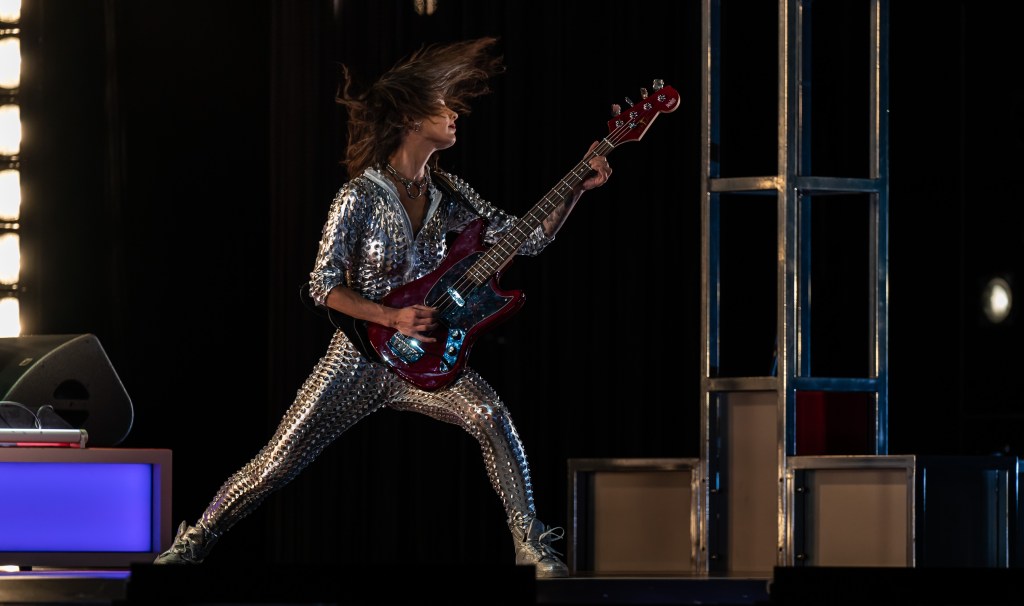


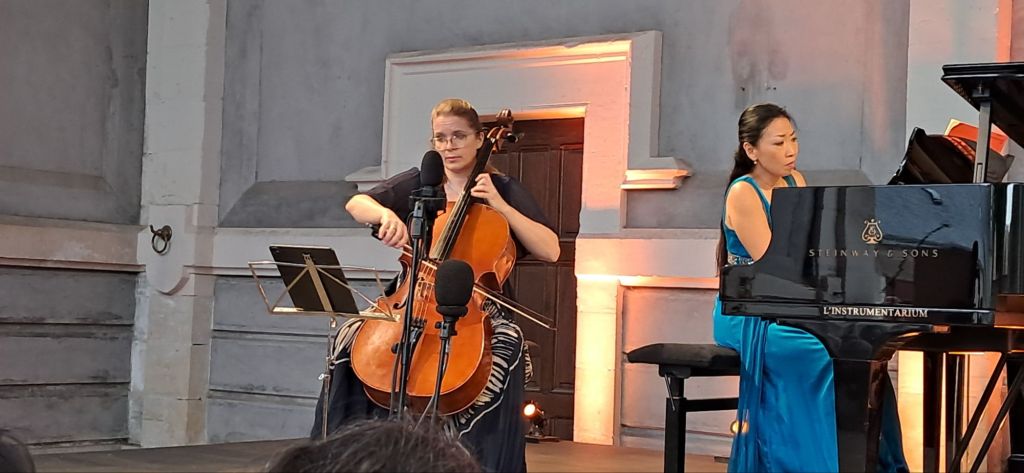


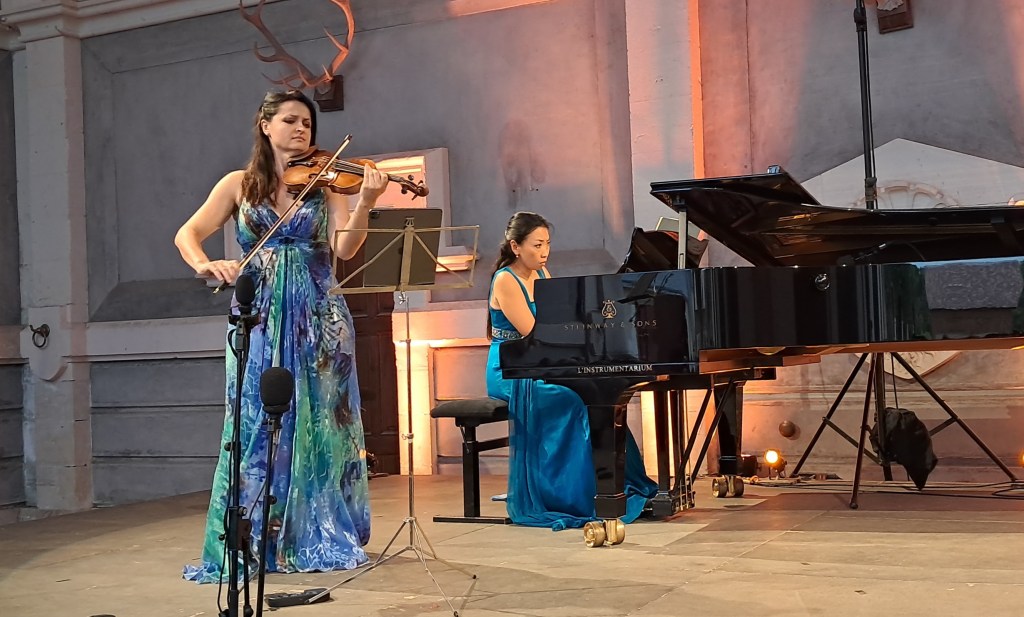


 Photo © Jean-Claude Djian
 Mon oeil sur l'In-Formation