Daily Life in Israel Under Bombardment.

Karin, psychologist : “Whenever the sky erupts in flames, it takes time for me to reclaim my role as therapist…”

Karin, psychologist : “Whenever the sky erupts in flames, it takes time for me to reclaim my role as therapist…”

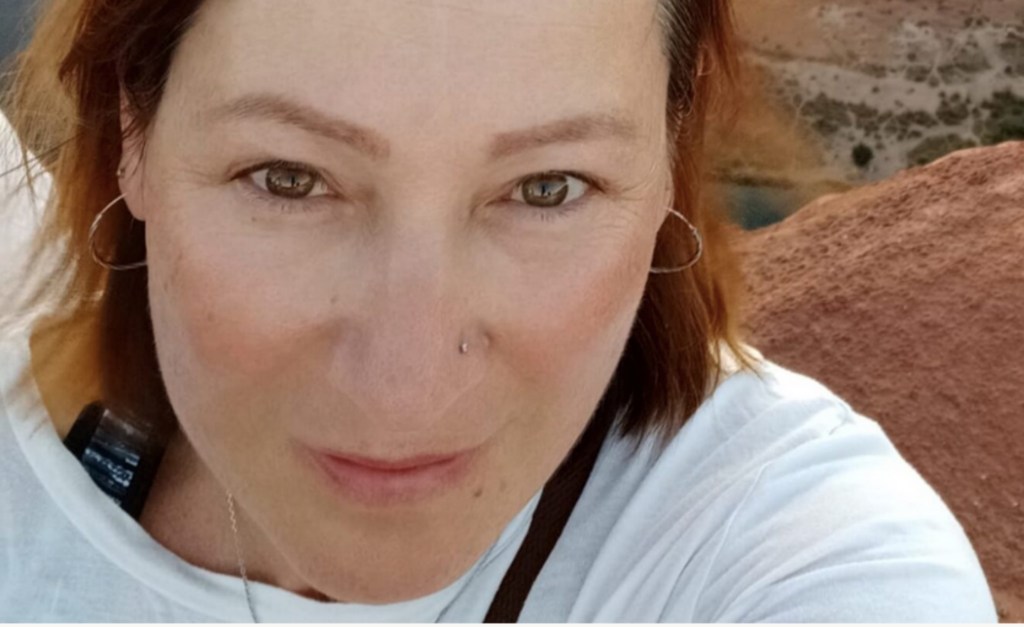
Karin Keydar © Karin Keydar

Karin Keydar, clinical psychologist residing mere kilometers from Gaza’s shadowed border, navigates a daily rhythm of dread and defiant vitality. The Levant blazes anew. America and Israel unleash their fury. Tehran counters with a barrage of missiles and drones raining upon Israel and Gulf realms. In Ashkelon’s southern embrace, sirens pierce the air once more, their wail ushering the thunder of blasts and the chill of terror into every hearth.

Karin Keydar (*) tends to adults and probes the enigmas of trauma therapy. Her home harbors the « mamad » — that armored sanctum etched into family lore.

“That morning dawned with a shrill cry. Phones shuddered under the Home Front Command’s decree: ‘Huddle by your shelter.’ We bolted the steel door, breath held in communal hush. Soon, word arrived: a military thrust underway. Two hours on, Iranian warheads scarred the heavens. Our city escaped unscathed, yet Tel Aviv’s footage seared the soul — a missile carving ruin through a sleeping neighborhood. Such visions draw the abyss perilously near.”

Solitude of a mother at war’s edge

“Yehuda, my husband, commands as reserve officer and company head. Since October 7, he’s logged over 300 days in the fray — North, then Gaza. For me, it’s a labyrinth of solitude, emblematic of Israel’s hidden legions: ‘wives and kin of reservists,’ a tribe unto itself. Purim that day promised revelry; costumes draped in anticipation, children alight with joy. Then sirens shattered the mirth. Festivity folded into the bunker’s stifled vigil.”

Young Israeli girls in a parking lot © Laurence Gea MYOP for Le Monde

Therapist amid the fracture

“Whenever the sky erupts in flames, it takes time for me to reclaim my role as therapist. My patients dwell border-close; some mourn homes razed, kin vanished, nights forever fractured. We tend wounds without horizon — raw, relentless. Trauma here pulses endlessly, flaring with each salvo, each headline’s glare. My trial as healer? I stand not aloof but immersed — sirens my chorus too, my own fledglings to safe haven. This mutual fragility reshapes the consulting room, demanding unyielding guardianship of borders and the self’s fragile flame.”

A street in Tel Aviv after a bombing © Fox News

War’s shadow, resilience’s spark

“Since Iran’s Supreme Guide, Ali Khamenei, slipped into dust, the spirals unchecked. Whispers abound that it props Netanyahu’s throne of survival. Yet nationwide, I feel a countercurrent — spurning venom, courting whispers of accord, however frail. Peace? Not tomorrow. But mending? Yes. Each hand extended over a fist charts a divergent dawn.”

In the hush after sirens

“Resilience wears no fanfare here, no caped heroism. It whispers, teeters at times. Yet persists — in the quiet vow to embrace life anew, though trust lies in shards.”

Gathered by Jean-Claude Djian

*Karin Keydar, PhD, clinical psychologist and supervisor, specializes in adults, delving into psychotherapy, PTSD, anxiety, OCD, and the ache of isolation. From Ashkelon — Gaza a scant ten kilometers south — she cherishes husband and two children. 
VIVRE EN ISRAËL SOUS LES BOMBES

Karin, psychologue: « Chaque fois que le ciel s’embrase, il me faut du temps pour redevenir thérapeute… »

Karin Keydar © Karin Keydar

Le Proche‑Orient s’est embrasé. Les Etats-Unis et Israël ont frappé. Téhéran a répliqué par une salve de missiles et de drones contre Israël et plusieurs États du Golfe. Dans le sud du pays, à Ashkelon, les sirènes retentissent à nouveau. Le grondement des explosions et la peur s’insinuent jusque dans les appartements. Karin Keydar travaille avec des adultes et mène des recherches sur la psychothérapie du traumatisme. Sa maison abrite le «  Mamad » une pièce fortifiée que la famille connaît par cœur.

« Ce matin‑là. Tout a commencé par ce son strident. Nos téléphones ont vibré sous l’ordre du Commandement du Front intérieur : « Restez près d’un abri. » On a verrouillé la porte d’acier, on se tait. Quelques minutes plus tard, un message tombe : lancement d’une opération militaire. Deux heures après, les premiers projectiles iraniens franchissent le ciel. Dans notre ville, pas de victime, Mais nous avons vu les images de Tel-Aviv, où un missile a touché un quartier résidentiel et provoqué d’importantes destructions. Voir cela rend tout beaucoup plus proche. »

Solitude de mère face au front

« Yehuda, mon mari, est officier de réserve et commandant de compagnie. Depuis le 7 octobre, il a effectué plus de 300 jours de service. Son unité a servi à la fois dans le Nord et à Gaza.  Pour moi, c’est une expérience complexe qui est très courante en Israël. On nous appelle « les épouses et familles de réservistes ». C’est presque devenu une catégorie sociale à part entière. Ce jour de Pourim, mes enfants devaient se déguiser. Les costumes étaient prêts, l’excitation à son comble. Et puis, les sirènes stridentes ont retenti. La fête s’est terminée dans le silence de la chambre blindée. »

Jean-Claude Djian

Retrouvez la suite de cet article sur le site de Grands Reporters en cliquant sur le lien ci dessous :

Stéréo : un spectacle punck-rock de Philippe Decouflé

Stéréo rocke l’espace Jean Lurçat

Dans un tourbillon punk-rock où danseurs et musiciens se télescopent en live, Stéréode Philippe Decouflé cogne fort à Juvisy-sur-Orge. Création explosive de la Compagnie DCA, ce spectacle hybride fusionnant acrobaties, chorégraphie et riffs endiablés, a  électrisé l’Espace Jean Lurçat ce 7 février 2026.

Des JO 92 aux JO 26 : l’héritage Decouflé

Alors que se déroulent les Jeux d’hiver 2026 à Milan-Cortina, souvenons-nous du spectacle hors normes qu’avait chorégraphié et mis en scène Philippe Decouflé pour les JO d’hiver d’Albertville en 1992. Cette fresque olympique, mobilisant 3000 artistes professionnels et amateurs avec acrobaties et folie collective, avait propulsé la danse française sur la scène mondiale. Stéréo prolonge cette exploration de la musique live associée à la danse et aux arts du cirque : un trio instrumental (guitare-basse-batterie) dialogue avec cinq performeurs dans un chaos organisé, boucles temporelles et énergie brute.

Stéréo, un ovni rock’n’choré

Louise Decouflé Photo ©  Quentin LAFONT

Sur la scène de l’Espace Jean Lurçat à Juvisy-sur-Orge , Stéréo explose. Philippe Decouflé signe chorégraphie et mise en scène. Violette Wanty, Olivia Lindon, Eléa Ha Minh Tay, Aurélien Odout et Vladimir Duparc virevoltent entre pointes de ballet, plateforme shoes rétro-futuristes et acrobaties jouissives. Le groupe live – Arthur Satàn (guitare), Louise Decouflé (basse), Romain Boutin (batterie) – balance un son punk inspiré du film de Brian de Palma Phantom of the Paradise. Baptiste Allaert, danseur et comédien de la Compagnie DCA, qui devait danser et présenter le spectacle, blessé à la cheville droite quelques jours avant la représentation, n’a pu participer au spectacle. Philippe Decouflé et la troupe ont dû repenser Stéréo sans lui. Baptiste Allaert, assis au premier rang, était venu supporté ses camarades.

Jean-Claude Djian

Retrouver l’intégralité de cet article sur le site de Félix Magazine

From England to Brittany, support for Ukraine remains strong

Action Contre la Faim @Gonzalo Höhr
Action Contre la Faim @ Gonzalo Höhr

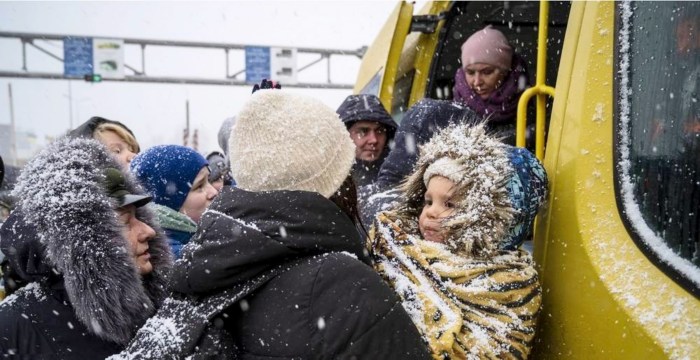
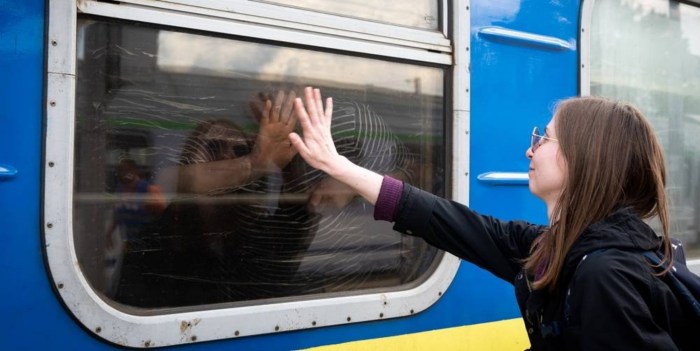
For nearly four years, thousands of Europeans have mobilized to support the Ukrainian people. From British convoys to Breton ports recycling their fishing nets into defensive shields, grassroots solidarity knows no borders. In Ukraine, every truck arriving from the West carries the same message: “You are not alone.”

action-contre-la-faim-cathy-anne-tijerina.jpg
Action Contre la Faim @ Cathy-Anne Tijerina

The importance of European aid to the Ukrainian people

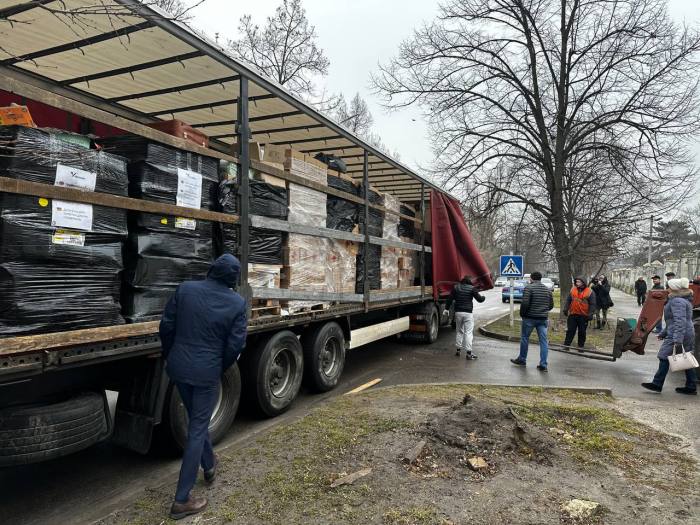
Since Russia’s invasion in February 2022, the European Union and its citizens have stood firmly behind Ukraine. EU member states and their NGOs have already mobilized more than €130 billion in humanitarian, financial, and military assistance. Beyond institutions, it is above all local initiatives that embody European generosity. Across the continent, the same momentum can be felt : trucks loaded with food, hygiene supplies, generators, and medical equipment travel the roads of Europe toward the Polish border. These collective efforts—often from small local associations—have become the backbone of Ukrainian civil resistance.

“The Friends of Oleksandriya”: a bridge between the UK and Ukraine

  • An afternoon of celebration in Oleksandriya
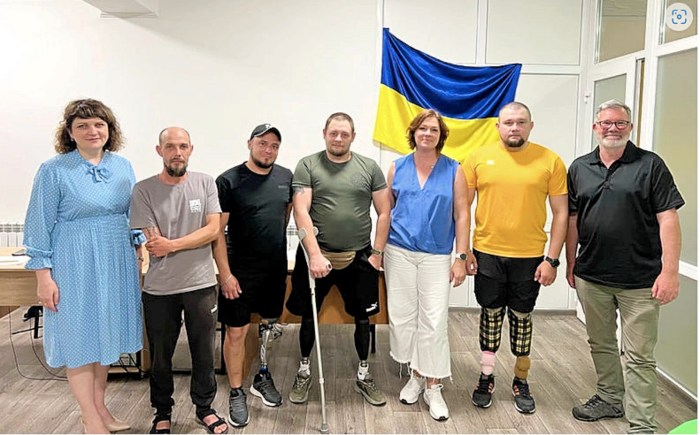
  • Aid for victims with prostheses
  • Transport of electric generators
  • A Christmas gift
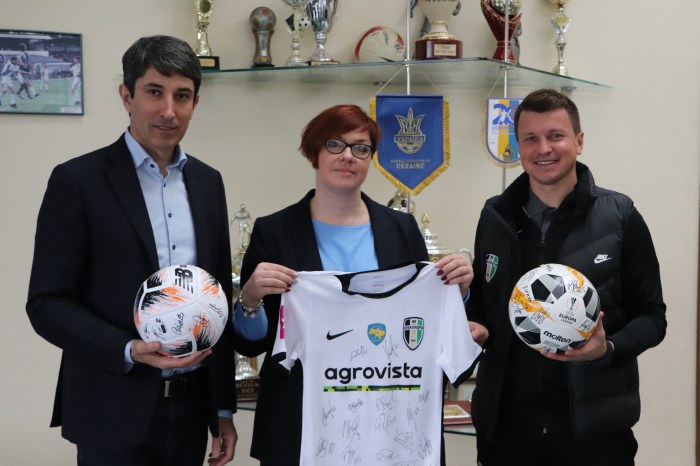
  • Support for the Oleksandriya football team

Interview with Zhenia Shkil, founder of the association The Friends of Oleksandriya

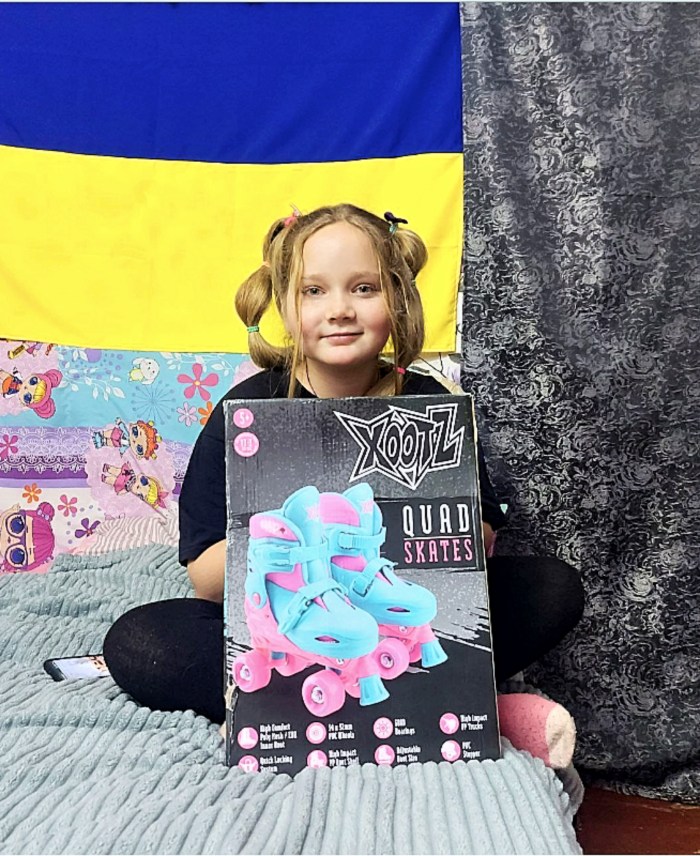
Everyone longs for peace and stability, but on the ground, the needs remain immense. After Russian bombings targeted schools and kindergartens, children’s mental health became an emergency. There is a severe lack of qualified specialists to treat post-traumatic disorders. We must be able to talk to the children, help them express what they’ve been through. At the same time, power outages are multiplying, making generators indispensable. We’ve already sent many, especially to Oleksandriya, but demand remains high—especially in smaller towns. Every winter, we try to bring a bit of comfort: gifts for children, often handed out during small charity events. Parents can no longer afford anything. These simple gestures remind people they are not forgotten.

Since 2022, the British charity The Friends of Oleksandriya has been committed to providing concrete support to the inhabitants of Oleksandriya, a city in the Kirovohrad region, in central Ukraine. During the Russian invasion, on April 15, 2022, the city’s infrastructure and airport were hit by two missiles. This team of volunteers funds medical equipment, rehabilitation materials, and electrical generators for schools, daycares, and hospitals. While most of their work focuses on Oleksandriya, their local partnerships are expanding. Each convoy—no matter how small—strengthens humanitarian cooperation and reminds everyone that war is also fought through solidarity.

Breton fishermen on the frontlines of solidarity : the anti-drone nets of Roscoff

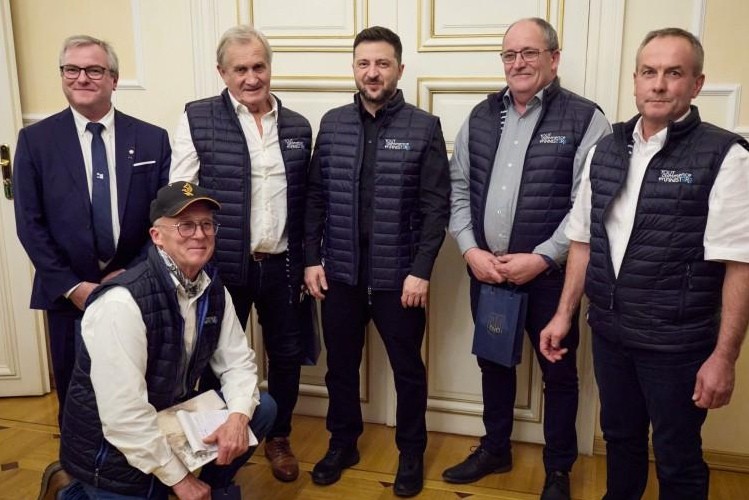
Kernick Solidarités members and Volodymyr Zelensky

A representative of the association Kernic Solidarités:

“We are responding to very practical needs today : supplying fishing nets to help protect Ukrainian civilians from drones. We use monkfish nets—solid and resistant. The initiative began this summer, after months of fruitless searching. Thanks to a retired Breton fisherman, everything came together in two days. Since then, we’ve kept collecting, and two more trucks will leave during the holidays. A single semi-trailer carries around forty big bags, each filled with four to five kilometers of nets—about 400 kg per bag. These shipments are destined for the Zaporizhzhia and Kherson regions, where civilians live under constant shelling, sometimes near schools. Our nets are now installed around school buildings, allowing parents and children to move about safely. When President Zelensky saw them, he asked: ‘Where did these nets come from?’ — ‘From two Bretons,’ he was told. He asked to meet us in Paris—and he did, a month and a half ago.”

In Roscoff, northern Finistère, the association Kernic Solidarités has launched a surprisingly innovative initiative. Rooted in the fishing community, it regularly sends recycled fishing nets to Ukraine, repurposed as anti-drone barriers. Since 2025, more than 250 kilometers of nets have been delivered, thanks to a network of volunteer fishermen and sponsors.

“This is our way, as fishermen, of helping defend an oppressed people,” says a member of Kernic Solidarités. “These nets save lives, and every strand we send is a sign of friendship.”

The idea has since inspired other European ports in Sweden and Denmark, which are considering replicating this effort. Kernic Solidarités convoys continue to transport, alongside the nets, medicine and essential supplies.

Four years after the conflict began, grassroots aid has not weakened. Whether from the Breton coast or an English suburb, every donation expresses a shared determination : to keep Ukraine standing. These actions—sometimes modest—form an unbroken chain of European solidarity. Associations urge continued material and financial support, for the humanitarian struggle is far from over.

Jean-Claude Djian

Associations supporting Ukraine

Union of Ukrainians in France
186 Boulevard Saint-Germain, 75006 Paris
Email: uniondesukrainiensdefrance1949@gmail.com
Website: https://uduf.fr/From England to Brittany, Support for Ukraine Remains Strong

Kernic Solidarités
Place de la Mairie, 29430 Plounévez-Lochrist
Website: https://espaceassociatif.bzh/Association/12504/kernic-solidarites

The Friends of Oleksandriya (UK)
Phone: +44 7568 500828
Email: friends.of.oleksandriya@gmail.com
Website: https://www.friendsofo.co.uk/

Association France-Ukraine
2 Place de Verdun, 27500 Pont-Audemer
Email: contact@france-ukraine.com
Website: https://france-ukraine.com/

« Nos hôpitaux refusent de mourir »

Jeudi 20 novembre, vers 10h30 du matin, une mobilisation s’est faite entendre devant l’hôpital André-Grégoire à Montreuil, symbole d’un secteur hospitalier public sous tension. Dans la rue, personnels soignants, travailleurs sociaux et usagers dénonçaient la casse organisée des hôpitaux publics : fusions imposées des établissements, manque criant de personnel, budgets écrasés.

« Nos hôpitaux refusent de mourir »

Roger Corbeau : l’âme d’une image

Au cœur de la Fondation Jérôme Seydoux-Pathé, l’exposition « L’œil de Roger Corbeau » plonge dans l’univers d’un photographe passionné par les visages des acteurs. De salle en salle, on suit son parcours, de 1933 à 1980, où chaque tirage raconte une histoire d’amour pour le cinéma, sculptant des icônes sous une lumière qu’il inventait […]

Roger Corbeau : l’âme d’une image

Le nouveau visage des universités : entre liberté académique et dérives idéologiques

L’Université Lumière Lyon 2 condamne un post Facebook du chercheur en histoire médiévale Julien Théry listant vingt signataires d’une tribune anti-palestinienne comme « génocidaires à boycotter ». La LICRA et les politiques réagissent, tandis que Jean-Luc Mélenchon et des syndicats défendent la liberté d’expression

Le nouveau visage des universités : entre liberté académique et dérives idéologiques